The Circular Testing Problem
Every engineering team on the planet adopted AI code generation this year. Copilot, Claude, Codex — probably all three at once. And the numbers look fantastic. Pull requests doubled. Sprint velocity went through the roof. Managers are thrilled.
But here's the thing nobody wants to say out loud: who is actually verifying all that code?
Think about it. When a developer writes a function, they write the tests too. And when they miss a bug, the tests miss it — because the same brain produced both. We have known about this problem forever. That is exactly why code review exists: a second set of eyes catches what the first set missed.
AI does not fix this. AI makes it dramatically worse.
When Copilot writes a function, it writes the tests too. Same model. Same training data. Same blind spots. The test does not catch the bug for the exact same reason the code has the bug — the AI has no idea it is wrong. Zero awareness. Zero independent verification.
AI writes function → AI writes tests → Tests pass → Ship it But: the AI that wrote the bug also wrote the test that misses the bug.
This is circular verification. You are grading your own exam. And shipping the results to production.
The Scale Problem
Here is the real number that should terrify you: your team reviews maybe 20-30% of AI-generated code with any rigor. The rest gets a glance — "Tests pass, types check, LGTM." When humans wrote 100% of the code and you trusted the author, that was acceptable. But now AI writes 70% of your codebase and nobody deeply understands every function. "LGTM" does not mean "looks good to me" anymore.
It means "I hope this is correct." Hope is not engineering.
Breaking the Circle
So what if there was a way to verify code that does not depend on the author — human or AI — to write the tests? A completely independent verification system. Different brain. Different method. No shared blind spots.
That is exactly what PCD blueprints do.
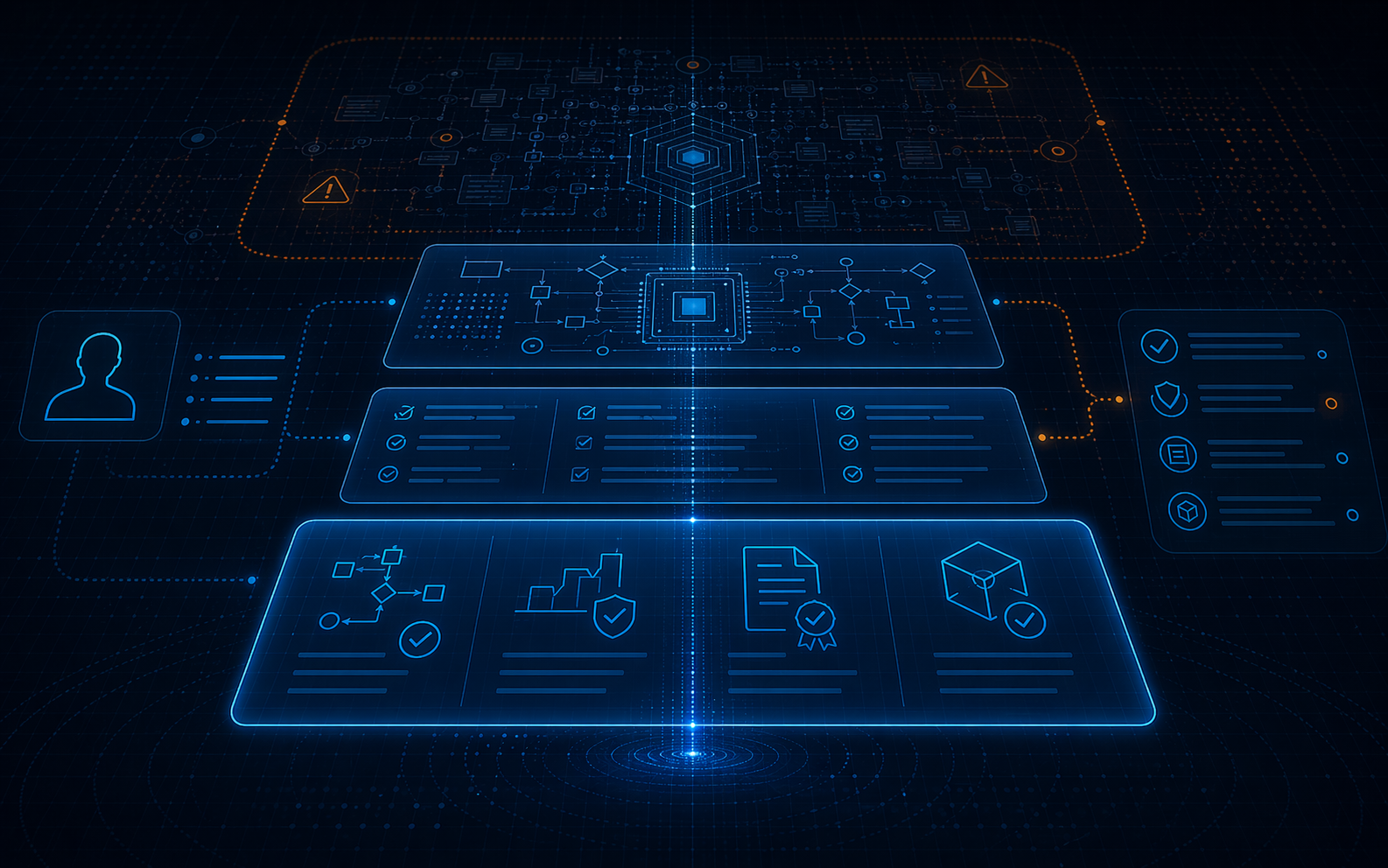
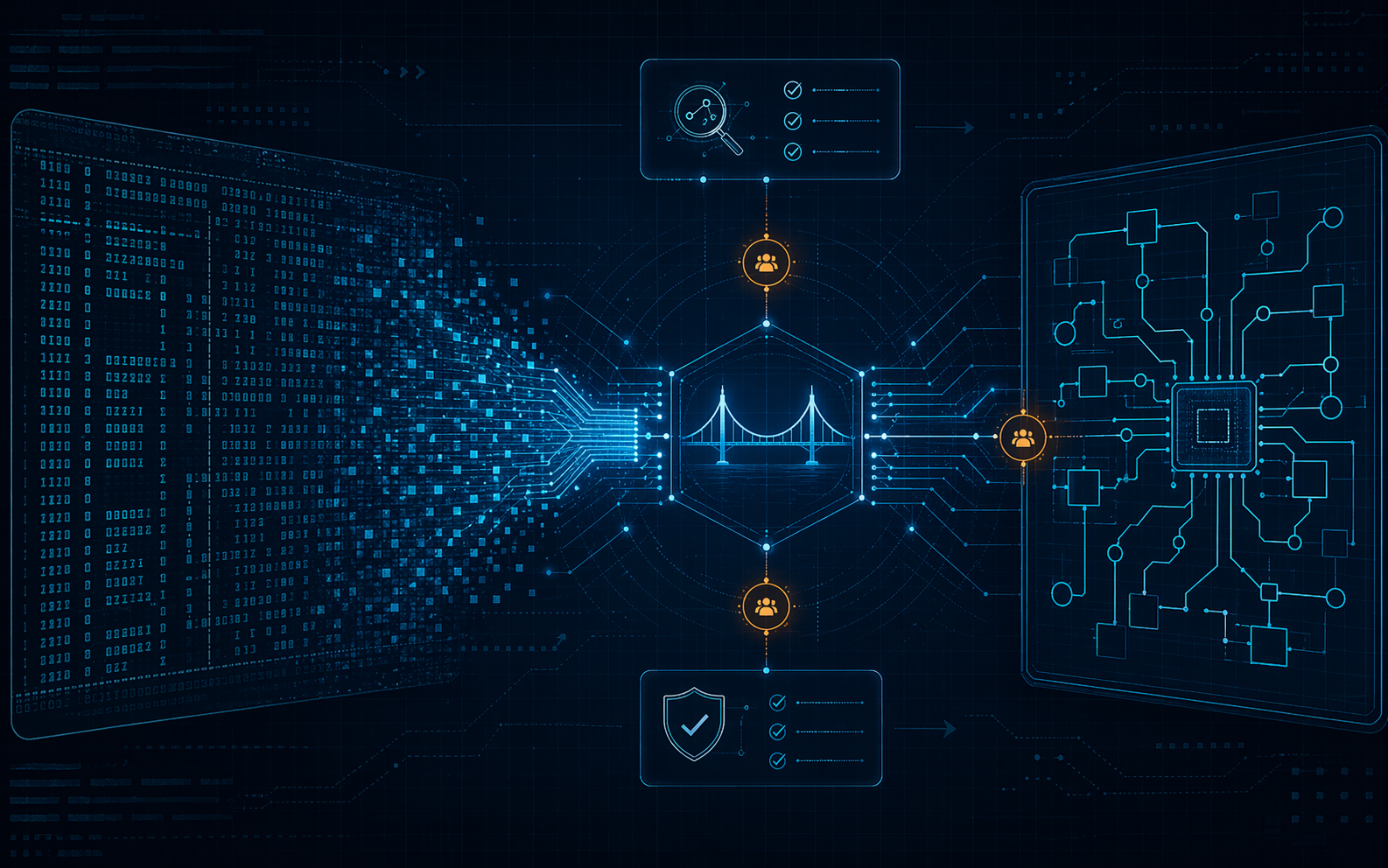
AI writes JavaScript ↓ BRIK64 Lifter analyzes it ↓ Converts to PCD blueprint (formal specification) ↓ Blueprint is mathematically verified ↓ Export to production code + auto-generated tests
Here is the key insight: the verification is completely independent of the generation. The AI wrote the code. A mathematical engine verified it. Two entirely different systems. Two entirely different methods. Zero shared blind spots.
What This Looks Like in Practice
Let me show you. Your AI generates a pricing calculation:
function calculateDiscount(price, quantity) { if (quantity >= 100) return price * 0.8; if (quantity >= 50) return price * 0.9; if (quantity >= 10) return price * 0.95; return price; }You run it through the Lifter. One command:
$ BRIK64 CLI lift pricing.js ✓ LIFTABLE calculateDiscount — 100%The Lifter converts it to a PCD blueprint. That blueprint is now mathematically verified: within the declared input domain, the output is correct and deterministic. Every edge case covered. No floating-point surprises. No "works on my machine." It just works. Everywhere. Provably.
Now export it with auto-generated tests:
$ BRIK64 CLI build calculateDiscount.pcd --target javascript ✓ Generated: calculateDiscount.js ✓ Generated: calculateDiscount.test.js (8 test cases)Those 8 test cases were not written by the AI. They were derived from the mathematical verification itself. They cover the actual behavior of the function — not a guess about what the behavior should be. That is the difference between testing and proving.
What You Cannot Lift (And Why That Is Honest)
We are not going to pretend everything is verifiable. We are not selling magic. Functions with network requests, database queries, file system access, or random number generation cannot be formally verified — because they are inherently non-deterministic. And we tell you that upfront.
$ BRIK64 CLI lift api_client.js ✗ BLOCKED fetchUser — side effect: network request ✗ BLOCKED saveToDb — side effect: database mutation ✓ LIFTABLE validateUser — 100% ✓ LIFTABLE formatUser — 100%The Lifter draws a clear, honest boundary. Validation logic, calculations, transformations, parsers — verifiable. I/O operations — not verifiable. And here is the beautiful part: most teams find that 60-80% of their business logic falls on the verifiable side. That is 60-80% of your code that can be review-scoped today.
The ROI Argument
Today: AI generates code, humans review it partially, bugs slip through, hotfixes pile up, customers lose trust.
With BRIK64: AI generates code, the Lifter verifies it automatically, review-scoped code ships, auto-generated tests catch regressions before they reach production. Done.
You are not replacing your AI tools. You are adding a verification layer that is completely independent of the AI that wrote the code. Independent verification is not a nice-to-have — in regulated industries like fintech, healthcare, and automotive, it is becoming a hard requirement. The teams that adopt it first will ship faster and break less.
Getting Started With Your Team
The platform at brik64.com lets you connect your GitHub repos, see real-time verification dashboards, manage reviewable blueprints, and export to any of 14 target languages — all through a visual interface. It takes five minutes to set up.
Your AI writes the code. BRIK64 makes sure it is correct. That is the product.