Every AI System Needs a Kill Switch. In Hardware.
In 1978, Mercedes-Benz put ABS in the S-Class. The idea was simple: a hardware system that prevents wheel lock during hard braking, regardless of what the driver does. Slam the brake pedal as hard as you want. The ABS modulates the pressure. The driver cannot override it. The hardware says no. That single decision has saved hundreds of thousands of lives.
ABS was not required by law when it launched. It was a premium feature. Then studies showed it reduced fatal accidents by 18%. By 2004, the EU mandated it on all new cars. By 2013, the US followed. Optional became standard. Standard became mandatory.
The same pattern applies to ESC, TCAS in aircraft, and EGPWS ground proximity warning. Each started as optional. Each was proven to save lives. Each became mandatory. This pattern repeats every time.
AI needs the same thing. A hardware safety layer that no software can override. We built it.
Why Software Safety Will Never Be Enough
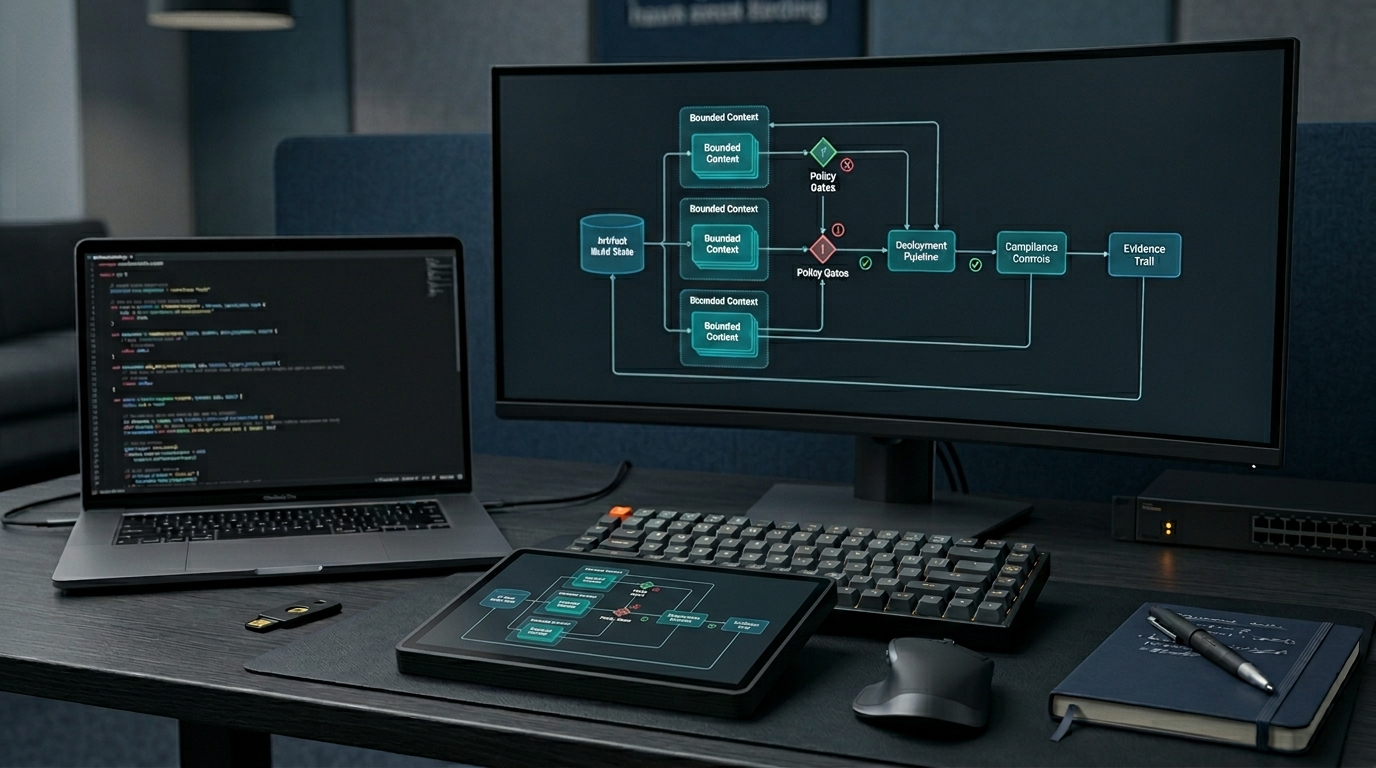
In Part 2, we explored PCD Policy Circuits — review-scoped software guardrails for AI agents. They are the best software-based AI safety mechanism available today. But they have a fundamental limitation: they run on the same CPU as the AI they are protecting.
That is like putting the fire alarm inside the furnace. It works great — until the furnace melts the alarm. Software guardrails can be patched, bypassed, or corrupted. Hardware cannot.
Introducing the BPU: BRIK Processing Unit
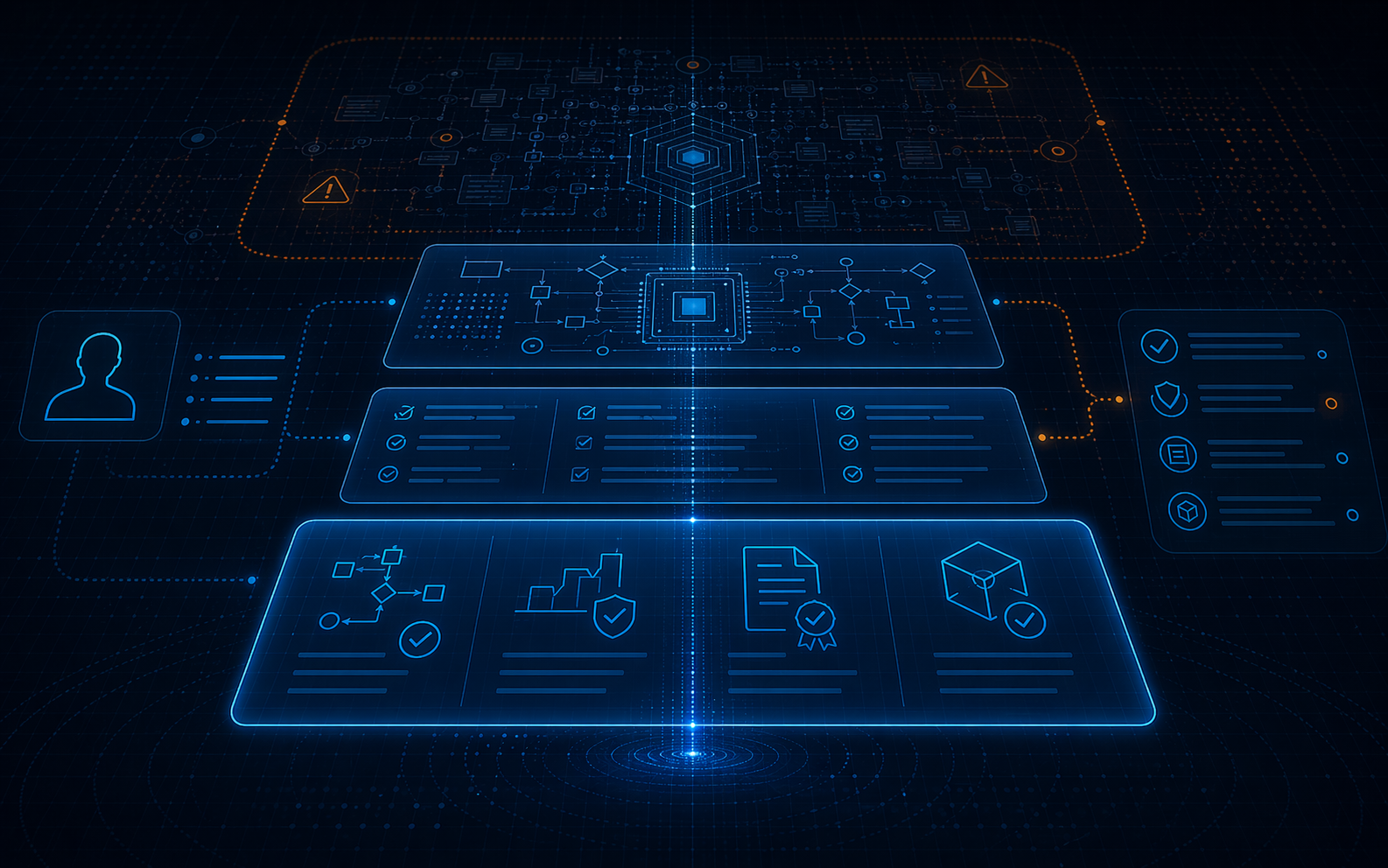
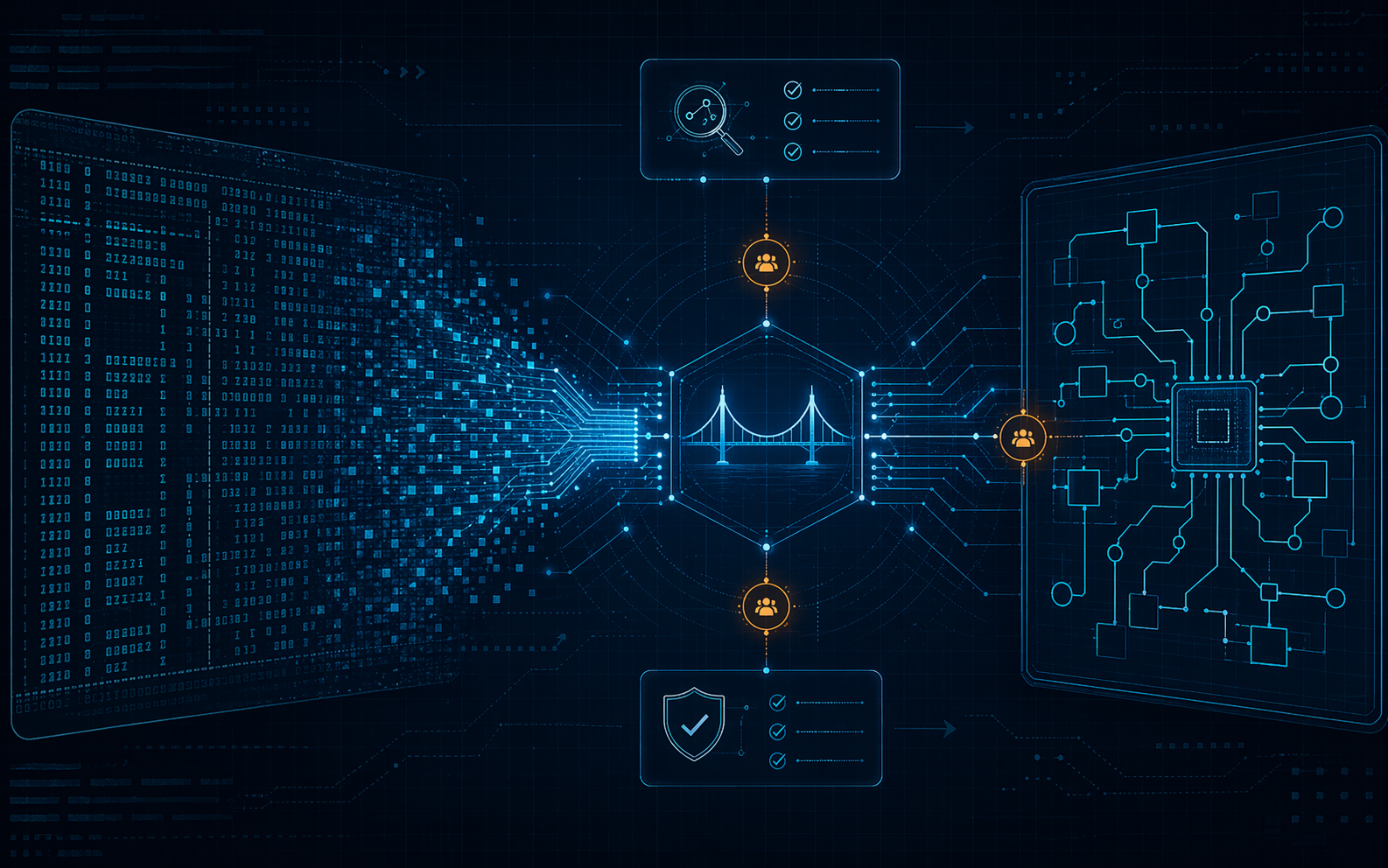
The BPU is a dedicated coprocessor — a physically separate chip — that does exactly one thing: verify every AI action against policy circuits before it executes. One job. under declared constraints.
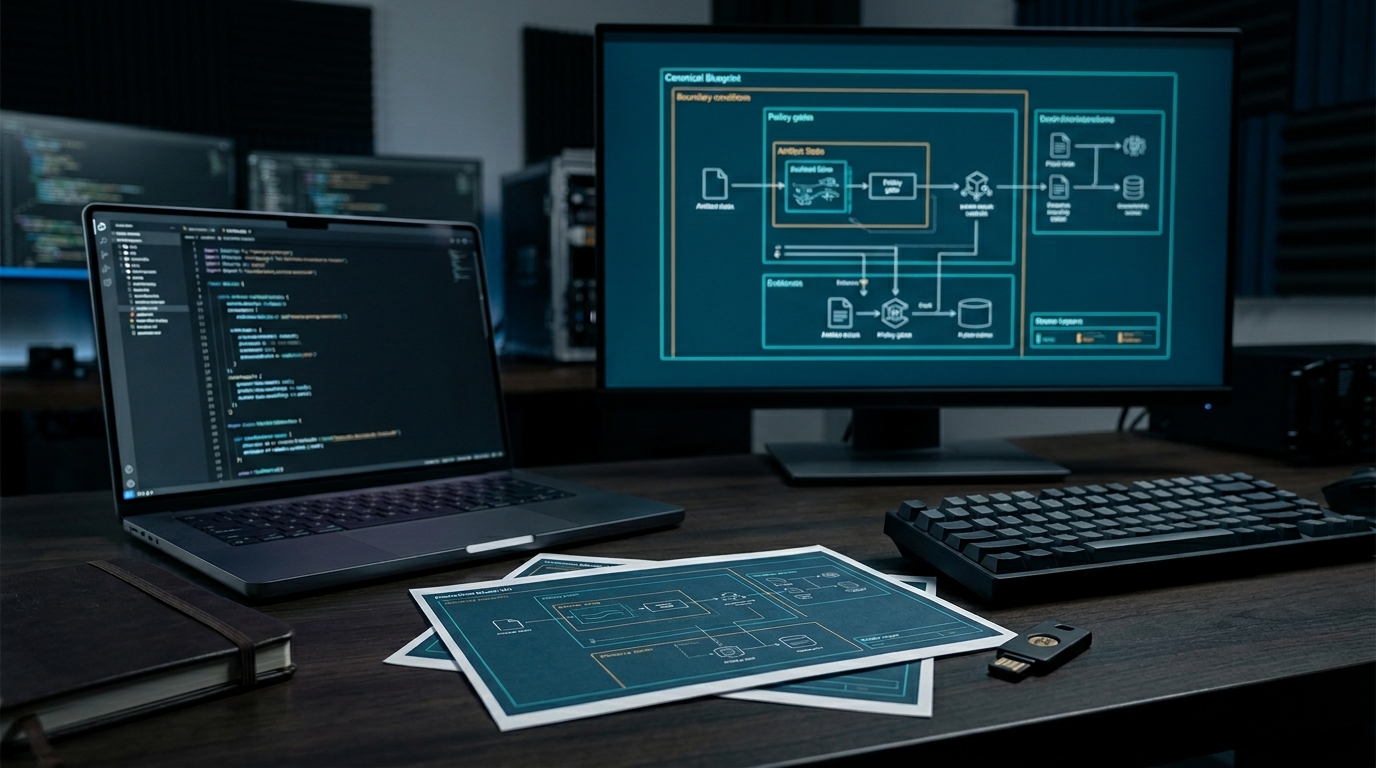
It is not a CPU. It does not execute programs. It does not have an instruction pointer. It does not fetch code from memory. It evaluates pre-loaded policy circuits composed of hardwired functional units — the same 128 monomers from BRIK64, but implemented in transistors instead of code — and produces a binary answer: ALLOW or BLOCK.
The architecture is not arbitrary. Just as DNA uses 64 codons to constrain all life to deterministic biochemistry, the BPU uses 128 monomers to constrain all AI actions to deterministic verification. The circuit cannot drift. It cannot be compromised. It cannot be hacked from software. It is physically separate.
How It Works
Step 1: AI proposes an action "Send email to external@partner.com with file budget.xlsx" Step 2: Action Translator converts to descriptor {policy: DATA_CLASS, sensitivity: 2, trust: 1, ...} Step 3: BPU evaluates policy circuit in hardware 64 monomer units (the genetic code of computation) evaluate the policy EVA Router connects them according to the circuit topology TCE Unit computes closure (genetic coherence) Step 4: Result closure check passed → ALLOW → action executes closure ≠ 1 → BLOCK → non-maskable interrupt → action blocked
The entire evaluation takes less than 10 microseconds. The AI does not slow down. The user does not notice. But every single action is verified against review-scoped safety constraints before it touches the real world. Every action. under declared constraints.
The Economics Are Obvious
"But adding a chip is expensive."
Is it? A BPU chip at volume costs $5-10. Knight Capital's trading bug (2012) cost $440 million. Boeing 737 MAX: 346 lives and $20 billion+. Uber AV fatality (2018): 1 life and millions in legal costs. Smart contract hacks (2023 alone): $1.7 billion. Therac-25 radiation overdoses: 3 lives. A $10 chip that prevents any one of these incidents pays for itself infinitely.
Here are the real economics, industry by industry:
For AI companies: reduced liability, faster regulatory approval, competitive differentiation. The company with BPU wins the enterprise deal.
For medical device companies: simplified FDA certification path through review-scoped hardware verification.
For automotive companies: ISO 26262 ASIL-D compliance through hardware verification. Not documentation. Proof.
For financial companies: provable regulatory compliance, elimination of flash crash risk. The SEC cannot argue with math.
For insurance companies: quantifiable risk reduction equals lower premiums for BPU-equipped systems. Better math, better rates.
The Regulatory Trajectory
Phase 1: Invention "Interesting, but who needs hardware safety?" Phase 2: Early Adoption Premium products adopt it for competitive advantage Phase 3: Industry Standard ISO/IEC publishes standard, reference implementation Phase 4: Regulatory Requirement Jurisdictions mandate it for high-risk applications Phase 5: Universal Adoption Nobody sells a product without itWe have seen this pattern three times already: ABS (1978 invention, 2004 mandatory EU), airbags (1973 invention, 1998 mandatory US), and TCAS (1956 concept, 1993 mandatory FAA). The BPU follows the same trajectory.
Here is the BPU timeline:
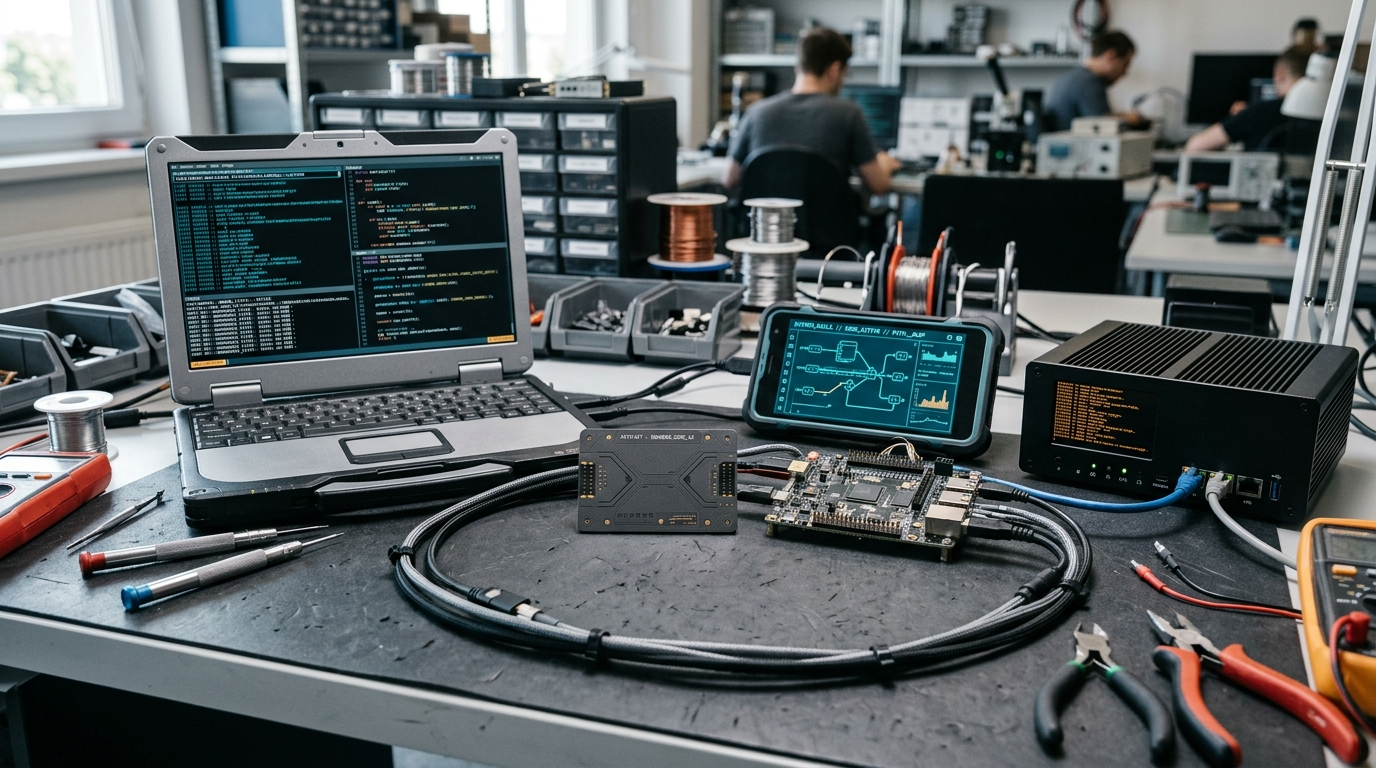
2026: Invention. PCD guardrail libraries ship. FPGA prototype demonstrates hardware verification.
2027-2028: Early adoption. AI companies integrate BPU for liability reduction and competitive advantage.
2028-2030: Industry standard. ISO/IEC publishes standard for hardware-verified AI safety.
2030-2035: Regulatory requirement. EU and US mandate BPU for high-risk AI systems.
This is not speculation. The EU AI Act (2024) already requires "appropriate technical and organizational measures" for high-risk AI. It does not specify hardware — yet. The company that offers hardware-verified AI safety defines what "appropriate technical measures" means. That company sets the standard.
Where BPU Becomes Mandatory
Robots in your home: A domestic robot must have a BPU to ensure it cannot injure a human, damage property, or exfiltrate personal data. Insurance companies require BPU certification before covering robot liability. No BPU, no coverage.
AI in hospitals: Any AI system that influences medical decisions — diagnosis, dosing, treatment planning — must route actions through a BPU. The BPU enforces dosage limits, contraindication checks, and patient safety protocols in hardware. No software patch can override a dosage limit. FDA requires BPU for Class III medical AI devices.
Autonomous vehicles: Every self-driving car has a BPU that verifies driving decisions against safety policies. The BPU can trigger emergency braking independently of the main driving computer — even if the AI disagrees. NHTSA requires BPU for Level 4+ autonomous vehicles.
Financial trading: All algorithmic trading systems must route orders through a BPU that enforces position limits, rate limits, and risk bounds. The BPU audit log serves as regulatory evidence. No more Knight Capital incidents. SEC/ESMA require BPU for high-frequency trading systems.
Military AI: Autonomous weapons systems require BPU enforcement of rules of engagement. The BPU cannot be overridden by software — only by authenticated human authorization through a physical key. Hardware-enforced rules of engagement. Required by international treaty on autonomous weapons.
Critical infrastructure: Nuclear plants, power grids, water systems — any AI-controlled critical infrastructure must have BPU verification of all control commands. A software bug in a nuclear plant is not a post-mortem. It is a catastrophe. CISA/NRC require BPU for AI-controlled critical infrastructure.
The Policy Circuit Economy
When BPU becomes standard, a new economy emerges — and it is massive:
Policy Circuit Engineers: Professionals who design, verify, and certify PCD safety policies for specific industries. They write the circuits that go into the BPU. They are the safety engineers of the AI age. This is a new profession that did not exist before BRIK64.
Certification Bodies: Independent organizations — like UL for electrical safety or TUV for automotive — that certify policy circuits against industry requirements. A review-scoped policy circuit carries a stamp of approval from a recognized authority. Trust, standardized.
Policy Marketplaces: Pre-review-scoped policy circuit libraries for common use cases: Medical dosing limits (FDA-review-scoped), Financial trading bounds (SEC-review-scoped), Autonomous vehicle safety (NHTSA-review-scoped), Drone geofencing (FAA-review-scoped), Data classification (GDPR-review-scoped), AI action rate limiting (generic).
Policy circuits are universal across all AI architectures. A review-scoped policy for medical dosing works the same on Claude, GPT, Gemini, or any future model. It does not matter which AI you use. The BPU enforces the same rules. Model-agnostic safety.
Insurance Integration: Insurers assess BPU policy configurations to determine premiums. Better policies, lower premiums. BPU audit logs provide forensic evidence for claims. Quantifiable safety equals quantifiable savings.
The Trust Equation
Today, when an AI system causes harm, the question is: "Was the AI safe?" And the answer is always a shrug. RLHF training? Passed. Benchmarks? Passed. Red-teaming? Passed. But the incident happened anyway. Because training is probabilistic. Benchmarks are finite. Red-teaming is incomplete. Nobody can prove anything.
With a BPU, the question becomes precise: "Did the BPU allow the action?"
If yes: The policy circuit is examined. Was the policy correct for this scenario? Was there a gap in the specification? This is a tractable engineering question with a mathematical answer. Not a blame game. An investigation.
If no (BPU blocked but system overrode): The override is the liability. The BPU did its job. The human or system that ignored it bears full responsibility. Clear, unambiguous accountability.
If the BPU was not present: Why not? If industry standard requires it and it was omitted, that is negligence. Just like selling a car without ABS in a jurisdiction that requires it. The absence becomes the liability.
This clarity of accountability — mathematical, auditable, hardware-enforced — is exactly what regulators, insurers, and courts need. No ambiguity. No excuses. Just math.
The Vision
2026: BRIK64 ships as an immutable, formally verified artifact. PCD guardrail libraries available as software modules. FPGA prototype demonstrates hardware policy verification. 2028: First ASIC BPU chip fabricated. Early adoption by AI companies and medical device makers. ISO working group formed for hardware-verified AI safety. 2030: BPU standard published. First regulatory requirements for high-risk AI. Policy Circuit Engineer becomes a recognized profession. 2035: BPU is as common as TPM. Every AI server, robot, and autonomous vehicle has one. Hardware-verified AI safety is the baseline expectation. 2040: We look back and wonder how we ever trusted AI without hardware verification. Just as we wonder how we ever drove without ABS.
This is Part 3 of a three-part series. Part 1: What is Digital Circuitality? | Part 2: AI Safety with Policy Circuits